Beyond the River Crossing: 5 Unique Migration Experiences
While the dramatic river crossings of the Masai Mara are often the most publicized part of the Great Migration, the full cycle offers far more diverse and intimate wildlife encounters. Shifting your focus beyond the crowded banks of the Mara River allows you to experience the migration in ways that are quieter, more authentic, and often more rewarding. At Malaso Africa Safaris, we specialize in guiding travelers toward these hidden spectacles, ensuring your safari is defined by depth rather than just peak-season crowds.
1. The Calving Season: The Circle of Life
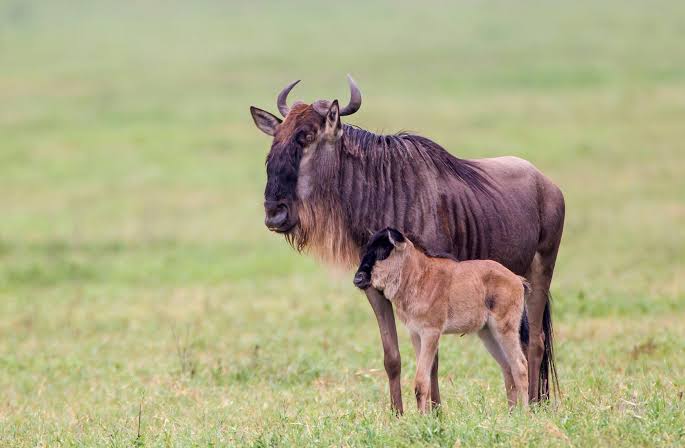
Often overlooked by those hunting for river crossings, the calving season in the Southern Serengeti and Ndutu plains (January–March) is arguably one of the most emotional and action-packed spectacles in nature. Over 500,000 wildebeest calves are born here in just a few weeks. This mass birth event attracts high concentrations of predators, providing front-row seats to the raw reality of the ecosystem. It is a time of immense vulnerability and extraordinary resilience that offers a completely different emotional connection to the migration.
2. Elevated Perspectives: The Balloon Safari
Viewing the migration from the ground is powerful, but seeing it from a hot air balloon offers a perspective that is impossible to replicate. Drifting silently above the savanna, you can grasp the true scale of the herds—a sea of movement stretching across the horizon that you simply cannot comprehend from a safari vehicle. It is a serene, high-value experience that provides the perfect vantage point for photographers and those looking for a truly "bucket-list" memory.
3. The Exclusivity of Private Conservancies
One of the best ways to enhance your migration safari is by staying in private conservancies adjacent to the main reserves. Unlike the national parks, conservancies allow for:
Off-road driving: This brings you significantly closer to the action, away from the rigid trail systems.
Night game drives: These allow you to witness nocturnal predators and behaviors that remain invisible to daytime safari-goers.
Walking safaris: You gain a deeper, more tactile connection to the environment, guided by experts who read the bush in ways vehicles cannot.
4. Following the Rut
The rut (mating season), occurring primarily in the Western Corridor and the Serengeti, is a high-energy period of intense social behavior. Watching the bulls compete for territory and mates is a display of raw power and stamina that underscores the physical challenges the herds face throughout their journey.
5. The "Quiet" Transition Phases
Traveling during the shoulder months—the periods just before or after the main migrations—offers a "private" safari experience. While the herds may be moving through less publicized areas, you benefit from lower vehicle density, more personalized attention from your guide, and a deeper sense of solitude in the African wilderness.
What Common Mistakes Do Travelers Make?
To ensure your safari is as rewarding as possible, avoid these common pitfalls:
Prioritizing a Single Spot: Do not become so obsessed with seeing a "crossing" that you spend your entire trip waiting at one spot. Migration is about the journey, not just one event.
Underestimating Travel Times: The ecosystems are vast. Allow yourself enough time in each location to actually experience the environment rather than rushing between transit points.
Ignoring the Shoulder Season: Many travelers miss the incredible action of the calving season or the quiet beauty of the transition months because they are only focused on the "peak" months.
Not Consulting Local Experts: A generic itinerary often fails to account for the yearly fluctuations in rainfall and herd movement. Always rely on local insights to adjust your plans in real-time.
Experience the Migration with Intention
A great safari is not just about checking a box; it is about immersing yourself in the rhythm of the wild. Malaso Africa Safaris is dedicated to designing itineraries that prioritize these unique, high-value experiences over the standard tourist trail.
[Contact us today to design your bespoke migration experience.]