
Blue vs. Black Wildebeest: Are They the Same Species?
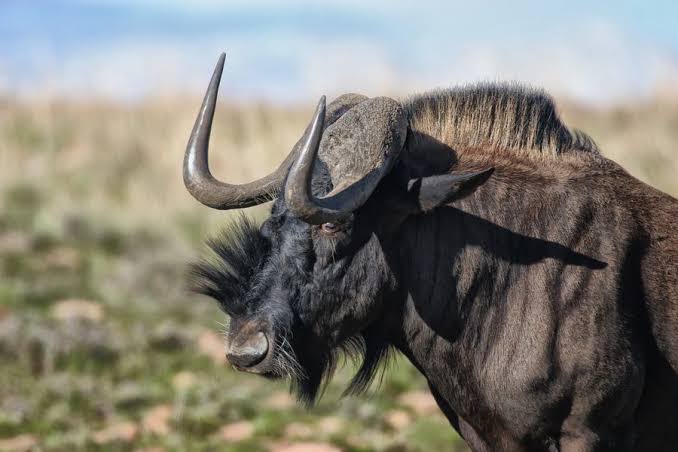
While the Great Migration is often associated with a single type of animal, the wildebeest genus (Connochaetes) is actually divided into two distinct species: the Blue Wildebeest and the Black Wildebeest. Understanding the differences between these two is essential for anyone interested in the ecological diversity of the African plains.
1. The Blue Wildebeest (Connochaetes taurinus)
Also known as the Common or Brindled Gnu, this is the species that makes the famous Great Migration.
Appearance: They are larger, with a silvery-blue-grey coat and dark vertical stripes on their shoulders.
Behavior: They are highly migratory, moving across the vast savanna ecosystems of East and Southern Africa in search of fresh grazing.
Habitat: They favor open plains, bushveld, and dry woodlands where they can move freely in large, communal groups.
2. The Black Wildebeest (Connochaetes gnou)
Also known as the White-tailed Gnu, this species is quite different in both appearance and behavior.
Appearance: They have a dark brown to black coat, a distinct white, horse-like tail, and horns that curve forward and downward, unlike the outward curve of the Blue Wildebeest.
Behavior: They are not migratory in the same way as their blue counterparts; they are more territorial and adapted to the shorter, mountainous grasslands of Southern Africa.
History: Once hunted to the brink of extinction, they have been successfully reintroduced to private farmlands and protected
areas in South Africa.
Comparison at a Glance
| Feature | Blue Wildebeest | Black Wildebeest |
| Common Name | Brindled Gnu | White-tailed Gnu |
| Migration | Long-distance migrator | Non-migratory/Sedentary |
| Tail Color | Black | White |
| Range | East & Southern Africa | Southern Africa |
Frequently Asked Questions (FAQ)
Can Blue and Black wildebeests interbreed?
Yes, in areas where their ranges overlap, they can interbreed and produce hybrid offspring, though they remain distinct species with different ecological adaptations.
Why Species Matters
Knowing the difference between these two species adds a layer of depth to any wildlife experience. Whether you are witnessing the massive, flowing herds of the Blue Wildebeest in the Serengeti or spotting the more territorial Black Wildebeest in a private reserve, you are observing two remarkable adaptations to the African landscape.