
Do You Need Vaccinations for a Kenya Safari?
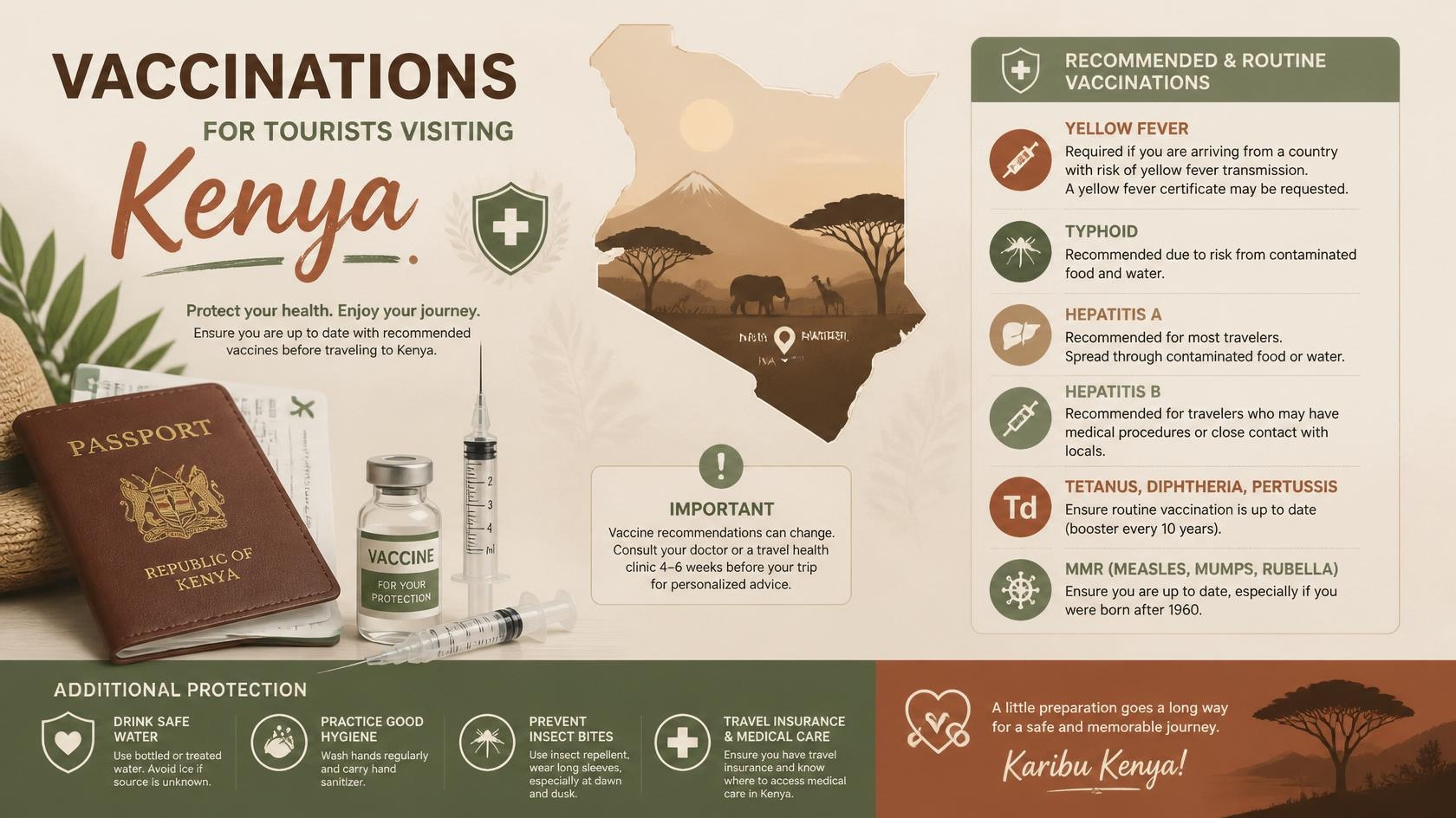
Planning an African safari is an exhilarating experience, but ensuring you are medically prepared is a vital step for a worry-free adventure. A common question travelers ask is: "Do I need vaccinations while traveling to Kenya for a safari?" The answer involves both mandatory requirements and recommended medical precautions to protect your health in the bush.
Mandatory Yellow Fever Requirements
The most critical health document for entry into Kenya is the Yellow Fever vaccination certificate.
Recommended Health Preparations
Beyond entry requirements, medical professionals strongly advise safeguarding yourself against common regional illnesses. Kenya’s diverse environment, including its rural safari reserves, means you may encounter food and water-borne diseases. Consequently, vaccines for Hepatitis A and Typhoid are widely considered essential for most safari travelers.
For those planning a more adventurous trip—such as camping, walking safaris, or extended stays—your health clinic may suggest additional protections. These can include vaccinations for Hepatitis B, which protects against blood-borne risks, and Rabies, which is a consideration for travelers visiting remote areas where medical care might be several hours away.
Malaria Prophylaxis
While not a vaccine, malaria prevention is a non-negotiable part of a Kenya safari health plan. Malaria risk exists in most parts of Kenya below 2,500 meters, including many popular safari circuits.