
15 Fascinating Facts About the Hadzabe of Tanzania, Their Culture & Traditions
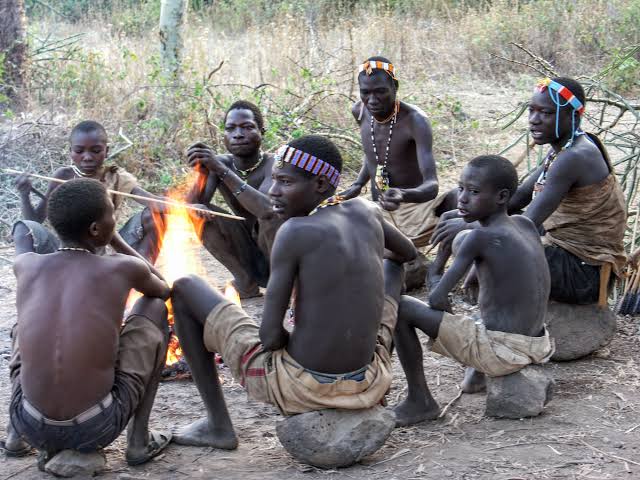
15 Fascinating Facts About the Hadzabe of Tanzania
Around the shores and surrounding landscapes of Lake Eyasi in northern Tanzania lives one of East Africa's most distinctive indigenous communities: the Hadzabe, also known as the Hadza.
The Hadzabe are particularly well known for their traditional hunter-gatherer way of life, distinctive language and detailed knowledge of the natural environment. Their culture has attracted the attention of anthropologists and travellers for generations, but there is much more to their story than the familiar image of a hunter carrying a bow or a family gathering wild foods.
The Hadzabe are a living community. Their traditions have deep historical roots, while their contemporary lives are increasingly influenced by education, markets, conservation, tourism, land-use changes and interaction with wider Tanzanian society.
Here are 15 fascinating facts that provide a deeper understanding of Hadzabe culture and heritage.
1. The Hadzabe Live Around Lake Eyasi in Northern Tanzania
The Hadzabe are primarily associated with the Lake Eyasi region of north-central Tanzania.
Lake Eyasi lies within the dramatic Rift Valley landscape south-west of the Ngorongoro Highlands. The surrounding environment includes dry woodland, rocky areas, seasonal water sources and a variety of wild plants and animals.
For generations, this landscape has provided the Hadzabe with food, materials and the environmental knowledge necessary for their traditional way of life.
The Ngorongoro Conservation Area Authority identifies the Hadzabe as an indigenous ethnic group of the Lake Eyasi area and recognises their distinctive hunter-gatherer culture.
Lake Eyasi is therefore more than simply a scenic destination. It is an important part of Hadzabe cultural geography.
Visitors travelling through northern Tanzania can encounter the Hadzabe alongside other communities in the Lake Eyasi region, including the Datoga.
2. Hunting and Gathering Are Central to Traditional Hadzabe Culture
The Hadzabe are one of the world's best-known contemporary communities traditionally associated with hunting and gathering.
Instead of depending primarily on farming or large herds of livestock, traditional Hadzabe subsistence has relied on obtaining food directly from the surrounding environment.
This includes:
- Hunting wild animals
- Collecting fruits
- Gathering berries
- Digging for tubers and roots
- Collecting honey
- Gathering seeds and other edible plant foods
The balance between different food sources changes according to season and availability.
Modern research shows that the traditional system remains culturally important, although contemporary Hadza livelihoods are more diverse than the popular image suggests. A 2026 Oxford Academic study notes that approximately 1,000 people identify as Hadza and speak Hadzane, while only around 300 still obtain a majority of their calories from foraged foods.
This distinction is important.
Not every Hadzabe person today lives entirely through traditional hunting and gathering.
3. Their Language Is Called Hadzane
The traditional language of the Hadzabe is known as Hadzane.
It is one of the most interesting languages associated with East Africa because of its distinctive sound system, particularly its use of click consonants.
The clicks are produced using movements of the tongue and mouth and form meaningful parts of words.
Hadzane is much more than a collection of unusual sounds. Like every language, it carries cultural knowledge, identity, relationships and ways of describing the surrounding world.
For a community whose traditional livelihood depends heavily on detailed environmental knowledge, language can be particularly important for communicating information about plants, animals, seasons and places.
Hadzane is therefore an important part of Hadzabe cultural identity.
4. Hadzane Is Considered a Language Isolate
One of the most fascinating linguistic facts about the Hadzabe is that Hadzane is generally classified as a language isolate.
A language isolate is a language for which linguists have not established a proven genealogical relationship with another language family.
The presence of click consonants has sometimes led to comparisons between Hadzane and some southern African languages containing clicks.
However, the presence of similar sounds does not automatically prove that languages are related.
Hadzane's linguistic history remains an important subject of research, making the language particularly interesting to linguists studying the diversity and development of human languages.
5. Many Hadzabe Also Speak Kiswahili
Hadzane remains central to Hadzabe identity, but contemporary Hadzabe communities also interact with the wider Tanzanian population.
For this reason, Kiswahili is increasingly important.
Kiswahili is Tanzania's national language and is widely used in education, trade, government services and communication between different ethnic communities.
Research has documented multilingualism among contemporary Hadza, with people using both Hadzane and Kiswahili in different social contexts.
This illustrates an important aspect of cultural change.
Learning another language does not necessarily mean abandoning one's traditional language. For many communities, multilingualism can allow people to maintain cultural identity while participating more fully in wider society.
6. Honey Is an Important Traditional Wild Food
Honey has long been an important food within traditional Hadzabe subsistence.
Finding wild honey requires considerable environmental knowledge.
A person needs to recognise signs associated with bees, understand seasonal conditions and know where flowering plants and suitable habitats can be found.
Honey is particularly valuable because it provides a concentrated source of energy.
The Hadzabe relationship with honey also demonstrates how closely traditional livelihoods are connected to the environment.
A forest, woodland or rocky landscape may appear ordinary to an unfamiliar visitor, but an experienced Hadzabe hunter or gatherer can recognise resources that others might never notice.
7. Women Have Traditionally Been Major Food Gatherers
Hadzabe women have traditionally played an important role in gathering plant foods.
Depending on the season and location, gathered foods can include:
- Berries
- Fruits
- Tubers
- Roots
- Seeds
- Other edible plants
This work requires extensive knowledge of the environment.
A successful gatherer needs to know which plants are edible, where they grow, when they become available and how they can be collected.
The traditional division of labour between hunting and gathering therefore represents complementary forms of environmental expertise.
Research and observations from the Lake Eyasi region document women gathering foods such as berries, baobab fruit and tubers.
8. Hunting Has Traditionally Been More Strongly Associated With Men
Hunting has traditionally been associated more strongly with Hadzabe men.
Hunters use their knowledge of animal behaviour, tracks, vegetation and the surrounding landscape to locate game.
Traditional hunting requires patience and environmental awareness rather than simply physical strength.
A hunter must understand where animals are likely to move, how their tracks appear and how seasonal conditions affect their behaviour.
However, hunting should not be presented as the entire Hadzabe food system.
Gathering is equally important, and the community has traditionally depended on a combination of food sources.
The Ngorongoro Conservation Area Authority describes Hadzabe life around Lake Eyasi as involving both hunting and the collection of wild foods.
9. Food Sharing Is Culturally Important
One of the most interesting aspects of Hadzabe social life is the importance of food sharing.
When someone obtains food, particularly a large amount of meat, it may be shared among other members of the camp.
This makes sense in a society where hunting success can vary considerably from day to day.
A hunter may return without food on one occasion and return with a large amount on another. Sharing helps spread resources and strengthens relationships.
Academic research has repeatedly examined food sharing among the Hadza and its connection with cooperation, reciprocity and social relationships.
Sharing therefore represents more than generosity. It can form part of the social system that helps communities function.
10. Hadzabe Social Groups Can Be Flexible
Traditional Hadzabe society is notable for relatively flexible social organisation.
Rather than living exclusively within large permanent settlements governed by rigid hierarchies, people have traditionally lived in relatively small groups or camps.
People can maintain relationships with relatives and other community members and may change their living arrangements.
This flexibility is closely connected to a mobile hunter-gatherer lifestyle.
If food resources become less available in one area, mobility allows people to respond to changing environmental conditions.
Research has also described the Hadza as having relatively few formal institutions of leadership and high levels of individual autonomy compared with many more hierarchical societies.
11. The Environment Is a Source of Detailed Cultural Knowledge
Perhaps one of the most remarkable aspects of Hadzabe culture is the depth of environmental knowledge developed through generations.
The landscape around Lake Eyasi may appear dry and challenging, especially during parts of the year.
Yet it contains numerous resources that can be identified by people with detailed knowledge of the area.
Traditional environmental knowledge can include understanding:
- Plant species
- Animal behaviour
- Seasonal changes
- Water sources
- Fruits and berries
- Tubers
- Honey locations
- Animal tracks
- Weather patterns
This knowledge is practical, cultural and educational at the same time.
It demonstrates how human communities can develop highly specialised ways of understanding their surroundings.
The archaeological record around Lake Eyasi also shows that the broader region has an exceptionally long history of human occupation and technological change. The nearby Mumba Rock Shelter contains archaeological deposits spanning major periods of East African prehistory.
12. The Hadzabe Are Not Pastoralists
The Hadzabe are distinct from neighbouring pastoral communities such as the Maasai and Datoga.
Traditional Hadzabe livelihoods have centred on hunting and gathering rather than maintaining large herds of cattle, sheep or goats.
This makes their culture particularly distinctive within the Lake Eyasi region.
The Ngorongoro Conservation Area Authority explicitly distinguishes the Hadzabe hunter-gatherer tradition from the pastoral lifestyles of the Maasai and Datoga.
The communities nevertheless interact.
For example, the wider Lake Eyasi region has historically supported forms of exchange between Hadzabe and neighbouring communities.
These relationships demonstrate that different cultural traditions can coexist and interact within the same landscape.
13. Hadzabe Culture Is Changing
One of the biggest misconceptions about the Hadzabe is that they live completely untouched by the modern world.
They do not.
Hadzabe communities today experience many of the same changes affecting other communities in Tanzania.
These include:
- Formal education
- Markets
- Healthcare
- Tourism
- Conservation
- Mobile communication
- Government services
- Changing land use
- Interaction with neighbouring communities
Research indicates that traditional foraging remains important culturally, but it is no longer the primary source of calories for every Hadza person.
The Ngorongoro Conservation Area Authority also identifies agriculture, pastoralism and tourism among the pressures affecting traditional Hadzabe life.
The story of the Hadzabe is therefore not simply about preserving an ancient lifestyle.
It is also about how a small indigenous community adapts to a rapidly changing environment.
14. Their Language Is an Important Part of Their Identity
Language is one of the strongest ways communities preserve cultural identity.
For the Hadzabe, Hadzane provides a connection between generations.
Through language, knowledge can be communicated about:
- Family
- History
- Animals
- Plants
- Places
- Social relationships
- Stories
- Cultural traditions
The continued use of Hadzane is therefore important beyond communication itself.
As younger generations increasingly interact with Kiswahili-speaking schools, markets and institutions, maintaining Hadzane can become an important part of cultural continuity.
At the same time, multilingualism gives Hadzabe people greater ability to interact with the wider society around them.
The two realities can coexist.
15. The Hadzabe Are a Modern Community With an Ancient Cultural Heritage
Perhaps the most important fact about the Hadzabe is that they are not a people trapped in the past.
Their cultural heritage is ancient and their traditional knowledge is extraordinary, but Hadzabe people live in the modern world.
Some continue traditional hunting and gathering.
Others engage with education, tourism, markets, conservation and other economic activities.
Some combine traditional practices with modern livelihoods.
This distinction matters because descriptions such as "primitive tribe" or "people living exactly as humans did thousands of years ago" oversimplify a complex living culture.
The Hadzabe have a long cultural history, but they are also contemporary Tanzanians making decisions about education, language, land, livelihoods and their future.
The Hadzabe and the Lake Eyasi Landscape
Understanding Hadzabe culture becomes easier when considering the landscape in which it developed.
Lake Eyasi is a saline lake within Tanzania's Rift Valley system, surrounded by dry landscapes and dramatic escarpments.
The wider area contains significant archaeological and cultural heritage.
Nearby Mumba Rock Shelter, for example, contains archaeological evidence documenting human occupation and technological change extending back more than 100,000 years.
The Hadzabe's contemporary cultural landscape therefore exists within a region with an exceptionally deep human history.
The connection between people and landscape is one of the strongest themes running through Hadzabe culture.
Hadzabe Culture and Tourism
The Hadzabe have become an important part of cultural tourism in northern Tanzania.
The Ngorongoro Conservation Area Authority lists Hadzabe cultural experiences among the cultural tourism activities available in the wider conservation area.
Travellers visiting the Lake Eyasi region may have opportunities to learn about:
- Traditional food gathering
- Hunting traditions
- Tools and crafts
- Language
- Songs
- Community life
- Environmental knowledge
However, cultural tourism should be approached responsibly.
A Hadzabe community should not be treated as a museum or as a performance created solely for visitors.
Travellers should listen to local hosts, ask permission before taking photographs and respect community members' choices about what they wish to share.
Why the Hadzabe Are Important to Tanzania's Cultural Heritage
The Hadzabe represent one of Tanzania's most distinctive cultural traditions.
Their importance lies not simply in their hunter-gatherer heritage, but in the combination of:
- A distinctive language
- Traditional ecological knowledge
- Oral traditions
- Food-sharing practices
- Flexible social organisation
- Hunting and gathering skills
- Deep connections to the Lake Eyasi landscape
The Ngorongoro Conservation Area recognises the Hadzabe as one of the indigenous communities contributing to the area's cultural diversity.
Their story also demonstrates why cultural tourism should go beyond photographs.
The more visitors understand the history, knowledge and contemporary realities of a community, the more meaningful cultural encounters can become.