
Leopard Facts: 15 Amazing Facts About Africa's Most Elusive Big Cat
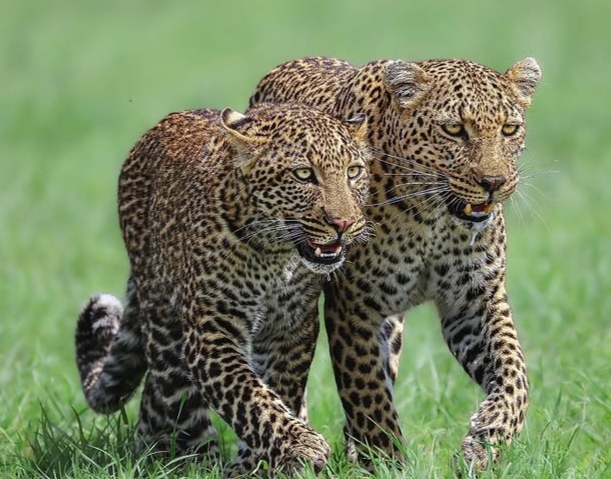
15 Amazing Leopard Facts
1. Leopards Are Among Africa's Most Elusive Big Cats
Leopards are naturally secretive and solitary animals. Their ability to hide in dense vegetation and blend into their surroundings makes them one of the most difficult animals to spot on safari.
Seeing a leopard in the wild is therefore considered a special safari experience.
2. Leopards Have Distinctive Rosette Patterns
A leopard's coat is covered with beautiful dark markings called rosettes. These markings help provide camouflage by breaking up the leopard's outline among trees, grass, and shadows.
Each leopard has a unique pattern of markings.
3. Leopards Are Excellent Climbers
Leopards are among the strongest climbers of Africa's big cats. They frequently climb trees to rest, observe their surroundings, escape danger, or store food away from scavengers.
4. Leopards Often Carry Their Prey into Trees
After making a successful kill, a leopard may drag its prey up a tree to protect it from other predators and scavengers. This remarkable behaviour demonstrates the leopard's incredible strength.
5. Leopards Usually Live Alone
Unlike lions, which live in prides, adult leopards are generally solitary. They usually spend most of their lives alone except during mating or when females are raising cubs.
6. Leopards Are Masters of Camouflage
Their spotted coats allow them to blend perfectly into their environment. A leopard can be sitting only a short distance away and remain extremely difficult to see.
7. Leopards Are Powerful Hunters
Despite being smaller than lions, leopards are exceptionally strong for their size. Their patience, strength, and stealth make them highly successful predators.
8. Leopards Are Ambush Hunters
Leopards rely primarily on stealth rather than chasing prey over long distances. They quietly approach their target before launching a sudden attack.
9. Leopards Are Often More Active at Night
Leopards are frequently active during the evening, night, and early morning. Their excellent vision helps them hunt effectively in low-light conditions.
10. Leopards Are Extremely Adaptable
Leopards can survive in many different habitats, including savannahs, woodlands, forests, mountains, and semi-arid areas.
11. Leopards Are Strong Swimmers
Although they are best known for climbing trees, leopards can also swim when necessary and may cross rivers while moving through their territories.
12. Female Leopards Raise Their Cubs Alone
Female leopards provide most of the care for their young. Cubs remain dependent on their mothers while learning essential survival skills.
13. Leopards Communicate Through Scent and Sounds
Leopards use scent marking and various vocalisations to communicate with other leopards and establish their territories.
14. Leopards Are Members of the Big Five
The leopard is one of Africa's famous Big Five, together with the lion, African elephant, African buffalo, and rhinoceros.
15. Every Leopard Sighting Is Special
Because leopards are solitary and elusive, seeing one in the wild is one of the most memorable experiences during an African safari.
Leopard Habitat: Where Do Leopards Live?
Leopards are highly adaptable and occupy a wide range of habitats across Africa.
Leopard Habitats in Kenya
In Kenya, leopards can be found in:
- Savannahs
- Riverine forests
- Acacia woodlands
- Rocky hills
- Dense vegetation
They generally prefer areas that provide sufficient cover for hiding and hunting.
What Do Leopards Eat?
Leopards are carnivores and eat a wide variety of prey depending on their habitat.
Common Leopard Prey
Their diet may include:
- Impalas
- Gazelles
- Young antelopes
- Warthogs
- Monkeys
- Birds
- Small mammals
Their ability to eat different types of prey is one reason why leopards are such adaptable predators.
How Do Leopards Hunt?
Leopards are skilled ambush predators. They rely on camouflage, patience, and stealth to get close to their prey before launching a powerful attack.
Unlike animals that chase prey over long distances, leopards usually depend on surprise and short bursts of speed.
Best Places to See Leopards in Kenya
Kenya offers several excellent safari destinations for leopard sightings.
Masai Mara National Reserve
The Masai Mara National Reserve is one of the best places in Kenya to see leopards. Its riverine forests and woodland habitats provide excellent cover for these elusive cats.
Best for:
- Leopard photography
- Big Five safaris
- Predator viewing
- Great Wildebeest Migration safaris
Samburu National Reserve
Samburu offers excellent opportunities for leopard sightings, particularly around the Ewaso Nyiro River and its surrounding vegetation.
Best for:
- Leopard sightings
- Northern Kenya wildlife
- Wildlife photography
Ol Pejeta Conservancy
Ol Pejeta Conservancy is an excellent destination for travellers hoping to experience the Big Five.
Leopards live within the conservancy, although sightings cannot be guaranteed.
Best for:
- Big Five safaris
- Conservation experiences
- Wildlife viewing
Tsavo West National Park
Tsavo West offers a vast wilderness with dense vegetation, rocky landscapes, and natural springs. Leopards are found in the park, although the thick vegetation can make sightings more challenging.
Best for:
- Wilderness safaris
- Big Five experiences
- Longer Kenya safari circuits
When Is the Best Time to See Leopards on Safari?
Leopards can be seen throughout the year in Kenya.
Best Time of Day to See Leopards
Leopard sightings are often more likely during:
- Early morning
- Late afternoon
- Evening
Leopards may be more active during cooler periods, although daytime sightings are also possible.
Why Are Leopards So Difficult to See?
Leopards are among the most challenging safari animals to spot because they are:
- Solitary
- Secretive
- Highly camouflaged
- Often active during low-light hours
- Skilled at hiding in trees and dense vegetation
Their elusive nature is one of the reasons why leopard sightings are so special.
How Fast Can a Leopard Run?
Leopards are fast and agile animals capable of reaching impressive speeds over short distances.
However, they generally rely more on stealth and surprise than long-distance chases.
Are Leopards Dangerous?
Leopards are powerful wild predators and should always be treated with respect.
They generally avoid humans in the wild. Safari visitors should remain inside their vehicles unless instructed otherwise by an authorised safari guide.
Can You See Leopards on Every Kenya Safari?
Leopard sightings can never be guaranteed.
Your chances depend on several factors, including:
- Safari destination
- Time of day
- Habitat
- Animal movement
- Weather conditions
- Experience of your safari guide
Spending more time in leopard-rich destinations can significantly improve your chances.
Frequently Asked Questions About Leopards
What Is Special About a Leopard?
Leopards are famous for their distinctive rosette-patterned coats, exceptional camouflage, remarkable climbing ability, strength, and adaptability.
Are Leopards Stronger Than Lions?
Lions are much larger and stronger overall. However, leopards are exceptionally powerful for their size and are famous for carrying heavy prey into trees.
Why Do Leopards Climb Trees?
Leopards climb trees to rest, observe their surroundings, escape danger, and protect their prey from scavengers.
Are Leopards Part of the Big Five?
Yes. Leopards are one of Africa's Big Five animals alongside lions, elephants, buffaloes, and rhinoceroses.
Where Is the Best Place to See Leopards in Kenya?
The Masai Mara National Reserve and Samburu National Reserve are among Kenya's best destinations for leopard sightings.
Why Are Leopards Difficult to Spot?
Leopards are solitary, highly camouflaged, secretive, and often active during the evening or early morning.
Book Your Leopard Safari with Malaso Africa Safaris
Dreaming of seeing Africa's most elusive big cat in the wild? Malaso Africa Safaris can help you plan an unforgettable Kenya safari to some of the country's best leopard habitats.
Explore the wildlife-rich plains of the Masai Mara, follow the riverine landscapes of Samburu, experience conservation at Ol Pejeta, or combine several destinations for an extended wildlife adventure.
Why Travel with Malaso Africa Safaris?
- Tailor-made Kenya safari packages
- Private and group joining safaris
- Professional and experienced safari guides
- Comfortable 4x4 safari vehicles
- Budget, mid-range, and luxury accommodation
- Multi-destination safari itineraries
- Personalised travel planning and booking support
Start Planning Your Leopard Safari Today
Contact Malaso Africa Safaris today and let us help you search for one of Africa's most beautiful and elusive predators on an unforgettable Kenya safari.