Ngorongoro Crater Safari Guide: Wildlife, Costs, Best Time & Itineraries
Ngorongoro Crater Safari Guide: Wildlife, Costs, Best Time & Itineraries
The Ngorongoro Crater is one of Tanzania's most extraordinary safari destinations and one of the most distinctive wildlife landscapes in Africa. Located within the Ngorongoro Conservation Area in northern Tanzania, the crater combines dramatic scenery, abundant wildlife, archaeological heritage and opportunities to experience the culture of communities living within the wider conservation area.
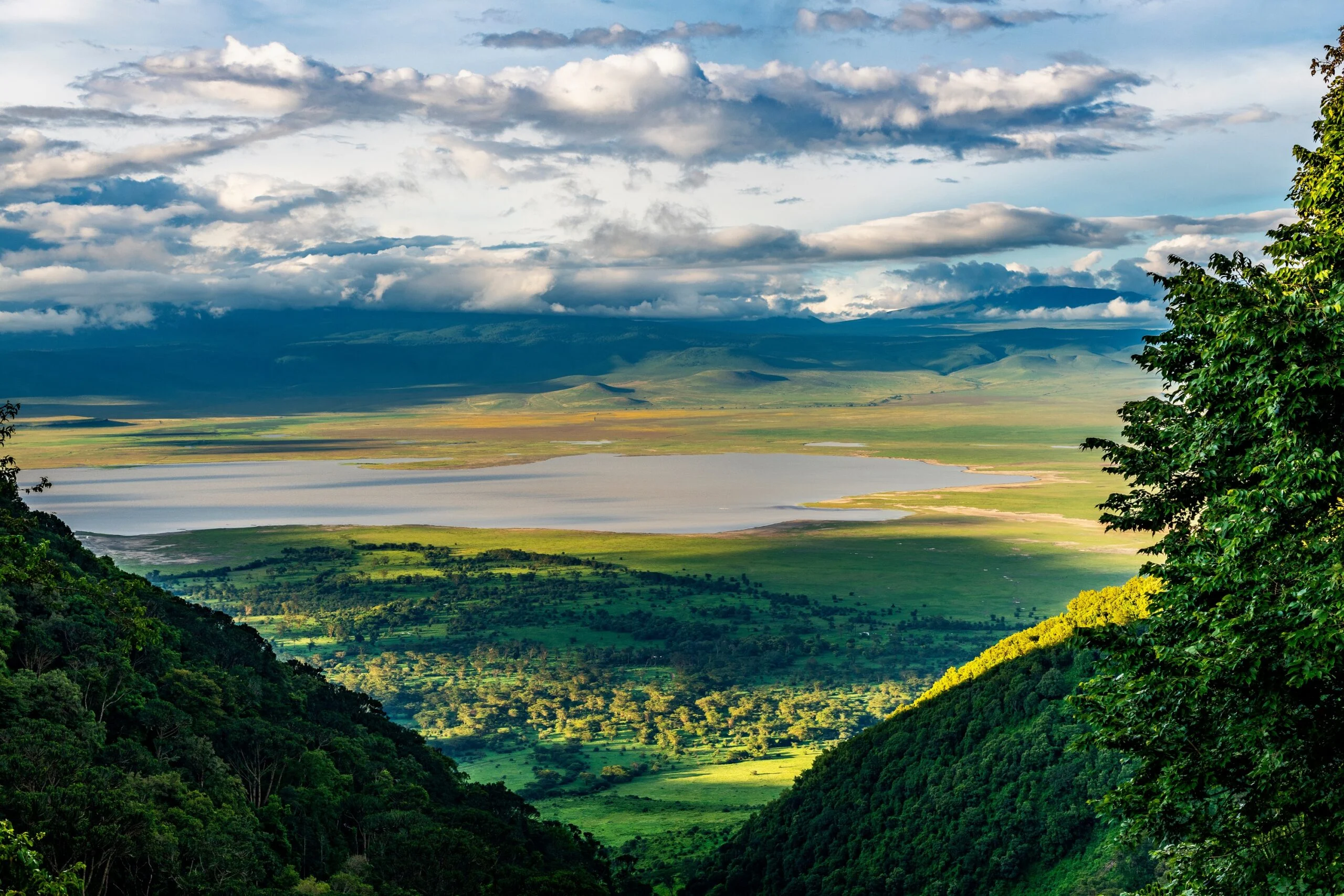
The crater itself is an enormous intact volcanic caldera measuring approximately 16 kilometres across, with walls rising more than 600 metres above the floor. Its enclosed grasslands, wetlands, woodland and Lake Magadi create a remarkable habitat for wildlife.
A safari here is different from exploring a conventional national park. The Ngorongoro Conservation Area is a multiple-use landscape where wildlife conservation exists alongside human habitation, pastoralism, cultural heritage and tourism.
Whether you are planning a short Tanzania safari or a longer itinerary combining Tarangire, Serengeti and Ngorongoro, this guide explains what to expect.
What Is the Ngorongoro Crater?
The Ngorongoro Crater is the largest intact volcanic caldera in the world. Its steep walls surround a fertile crater floor containing grasslands, wetlands, woodland and water sources.
The enclosed nature of the crater makes it particularly productive for wildlife viewing.
Large concentrations of animals can be found on the crater floor, including wildebeest, zebra, buffalo, gazelles, elephants, hippos, hyenas and lions. Black rhinoceros are also present and are among the most sought-after sightings.
The crater is part of the much larger Ngorongoro Conservation Area, which extends far beyond the crater itself.
This distinction is important when planning a safari: Ngorongoro Crater and Ngorongoro Conservation Area are not exactly the same thing.
Why Visit Ngorongoro Crater?
A Ngorongoro safari offers several experiences in one destination.
Exceptional wildlife viewing
The concentration of wildlife within the crater makes it one of northern Tanzania's most rewarding areas for a game drive.
Dramatic scenery
The crater rim provides spectacular views across the enormous caldera, while the crater floor contains a changing mixture of grasslands, wetlands and woodland.
Black rhinoceros sightings
The crater is recognised by the NCAA as one of the best places in Africa to look for the endangered black rhinoceros.
Cultural experiences
The wider conservation area is home to communities including the Maasai and Hadzabe, providing opportunities to learn about Tanzania's cultural diversity.
Archaeological heritage
The Ngorongoro Conservation Area contains important archaeological sites, including Olduvai Gorge and the Laetoli footprints.
Ngorongoro Crater Wildlife
Wildlife is the main attraction for most visitors.
The crater supports substantial populations of large mammals throughout the year.
Lions
Lions are among the most commonly sought-after predators in Ngorongoro.
The enclosed ecosystem provides opportunities to observe lions hunting, resting and interacting with other animals.
However, wildlife is never guaranteed, and sightings depend on season, location and daily conditions.
Black Rhinoceros
The black rhinoceros is one of Ngorongoro's most valuable wildlife sightings.
The NCAA identifies the crater as perhaps one of the best places in Africa to see this endangered species.
Seeing a rhino is never guaranteed, but the crater provides an important habitat for them.
Elephants
Elephants can be encountered in the crater, particularly around areas such as the Gorigor Swamp.
The crater also supports other large herbivores, creating opportunities for varied wildlife encounters during a single game drive.
Buffalo
Large numbers of African buffalo inhabit the crater.
Their presence contributes to the impressive concentration of large herbivores found on the floor.
Wildebeest and Zebra
Wildebeest and Burchell's zebra are among the prominent herbivores found across the crater grasslands.
The NCAA records large resident populations of both species.
Hyenas
Spotted hyenas are particularly well represented.
The NCAA estimates that more than 400 spotted hyenas occur within the crater, particularly around Lake Magadi.
Hippos
Hippos can be seen around the crater's wetland areas.
They are particularly associated with permanent water sources where they can remain submerged during the heat of the day.
Gazelles
Thomson's and Grant's gazelles are among the antelopes found on the open grasslands.
Their presence also attracts predators such as lions and hyenas.
Cheetahs and Leopards
Cheetahs occur within the wider Ngorongoro Conservation Area but are relatively scarce inside the crater.
Leopards are occasionally seen, although they are much less predictable than lions and hyenas.
The Big Five in Ngorongoro Crater
Ngorongoro is often included in Tanzania's Big Five safari circuits.
Visitors may encounter:
- Lion
- Leopard
- Elephant
- Buffalo
- Black rhinoceros
However, seeing all five during one visit is never guaranteed.
Wildlife viewing is influenced by weather, season, animal movements and the amount of time spent in the area.
A good guide can significantly improve the experience by understanding animal behaviour and knowing the permitted routes.
Best Time to Visit Ngorongoro Crater
Ngorongoro is open throughout the year, according to the NCAA.
The best time depends on what you want from your safari.
June to October
These months generally offer dry conditions and excellent wildlife-viewing opportunities.
Vegetation is often less dense, making animals easier to spot.
Mornings can be cold, particularly around the crater rim, so warm clothing is recommended. The NCAA specifically notes that June, July and August are among the coldest months.
November to December
Short rains can transform the landscape, bringing fresher vegetation and greener scenery.
The period can offer good wildlife viewing while generally experiencing fewer visitors than the busiest months.
January to March
The broader Ngorongoro ecosystem becomes particularly interesting during the migration season.
The nearby Ndutu Plains, within the Ngorongoro Conservation Area, are an important calving area for migratory wildebeest, zebra and gazelles. NCAA identifies the period from late December through April as the prime season for the migration in Ndutu.
April to May
The landscape becomes greener during the long rains.
Rain can make some travel conditions more challenging, but the scenery can be spectacular and visitor numbers are often lower.
Quick summary
| Period | What to expect |
|---|---|
| June–October | Dry conditions and strong wildlife viewing |
| November–December | Green scenery and short rains |
| January–March | Migration and calving around Ndutu |
| April–May | Green landscapes, rains and fewer visitors |
Ngorongoro Crater Safari Cost
There is no single price for a Ngorongoro safari.
The total cost depends on:
- Number of travellers
- Number of safari days
- Accommodation category
- Vehicle type
- Private or shared safari
- Guide services
- Park and conservation fees
- Meals
- Transfers
- Additional activities
- Season
Importantly, the Ngorongoro Conservation Area Authority publishes its own tariffs, including entry permits, vehicle-related charges, crater service fees and other services. NCAA also states that tariffs are subject to change without prior notice.
For this reason, a responsible safari quotation should show the major cost components rather than relying on a generic online price.
Budget safari
Budget travellers can reduce costs by choosing simpler accommodation and combining Ngorongoro with a shared safari.
Mid-range safari
Mid-range trips usually combine comfortable lodges or tented camps with a private or shared safari vehicle.
Luxury safari
Luxury itineraries can include premium lodges or camps on or near the crater rim, private vehicles and additional cultural or wilderness experiences.
What Does a Ngorongoro Safari Include?
Depending on the package, a safari may include:
- Safari vehicle
- Professional driver-guide
- Accommodation
- Meals
- Ngorongoro conservation fees
- Crater service fees
- Game drives
- Airport or hotel transfers
- Drinking water
- Government taxes
Always check the quotation carefully because inclusions differ between operators.
Ngorongoro Crater Safari Rules
Visitors must follow conservation-area regulations.
Only authorised 4x4 vehicles up to 3,500 kg tare weight are allowed on the crater floor, according to NCAA visitor guidelines. Off-road driving is prohibited unless specifically authorised.
Visitors must also avoid disturbing wildlife.
This includes:
- Feeding animals
- Throwing objects to attract animals
- Making unnecessary noise
- Harassing wildlife
- Leaving designated roads and tracks without authorisation
Driving on the crater floor is permitted during specified hours, and NCAA states that the crater has its own operating schedule.
Following these rules helps protect the ecosystem and ensures that wildlife encounters remain responsible.
How Many Days Do You Need for Ngorongoro?
You can visit Ngorongoro Crater as part of a one-day safari, but most travellers combine it with other northern Tanzania destinations.
1-Day Ngorongoro Crater Safari
This is suitable for travellers with limited time.
A typical day involves an early departure, descent into the crater, several hours of game viewing and an afternoon departure.
2-Day Ngorongoro Safari
A two-day itinerary provides more flexibility.
You can arrive around Karatu or the crater rim on the first day, enjoy the crater game drive on the second day and continue towards another destination.
3-Day Ngorongoro & Serengeti Safari
This is a popular short northern Tanzania combination.
It allows travellers to experience both the concentrated wildlife of Ngorongoro and the vast plains of Serengeti.
5-Day Northern Tanzania Safari
A longer itinerary can combine:
Tarangire → Ngorongoro → Serengeti → Ngorongoro/Manyara → Arusha
The exact route can be adjusted according to accommodation and travel priorities.
Sample 3-Day Ngorongoro & Serengeti Safari
Day 1: Arusha – Ngorongoro
Depart Arusha and travel towards the Ngorongoro Conservation Area.
Enjoy the changing scenery as the landscape transitions from cultivated areas and highlands towards the dramatic crater region.
Overnight near Karatu or on the crater rim.
Day 2: Ngorongoro Crater Game Drive
After an early breakfast, descend into the crater for a full game-viewing experience.
Look for lions, elephants, buffalo, wildebeest, zebra, hippos, hyenas, gazelles and, with luck, black rhinoceros.
After the game drive, ascend from the crater and continue towards the next accommodation.
Day 3: Serengeti or Arusha
Depending on the safari design, continue towards Serengeti for additional wildlife viewing or return towards Arusha.
Sample 5-Day Northern Tanzania Safari
Day 1: Arusha – Tarangire National Park
Game drive in Tarangire, famous for elephants, baobabs and diverse wildlife.
Day 2: Tarangire – Ngorongoro
Travel towards the Ngorongoro Conservation Area with opportunities to enjoy the highland scenery.
Day 3: Ngorongoro Crater
Descend into the crater for an extensive game drive.
Day 4: Ngorongoro – Serengeti
Travel towards Serengeti, enjoying game viewing en route.
Day 5: Serengeti – Arusha
Morning game drive followed by the journey back towards Arusha, depending on the selected transport arrangement.
Where to Stay for a Ngorongoro Safari
Accommodation can be found in several areas.
Crater Rim Lodges
These properties provide proximity to the crater and can offer spectacular views.
Their major advantage is reducing the distance to the crater entrance and allowing travellers to experience the dramatic highland environment.
Karatu
Karatu is a popular base for travellers visiting Ngorongoro.
It provides a wider selection of accommodation and is located outside the conservation area's main crater-rim zone.
Inside the Conservation Area
There are also camps and lodges within the broader conservation area.
The best choice depends on budget, safari route and whether you want maximum convenience for an early crater descent.
Ngorongoro's elevation means that temperatures can be noticeably cooler than in many other safari destinations.
Pack:
- Warm fleece or jacket
- Comfortable trousers
- Lightweight clothing
- Closed walking shoes
- Hat
- Sunglasses
- Sunscreen
- Binoculars
- Camera
- Reusable water bottle
- Rain jacket during wet periods
The NCAA specifically recommends warm clothing for the colder months and practical rain protection and footwear for highland areas.
Ngorongoro Crater vs Serengeti
Both destinations are excellent, but they offer different experiences.
| Ngorongoro Crater | Serengeti |
| Compact wildlife area | Vast open ecosystem |
| Dramatic crater scenery | Endless plains |
| Excellent concentration of wildlife | Famous for migration |
| Strong chance of seeing many species | Exceptional predator and migration experiences |
| Best suited to shorter game drives | Ideal for multi-day exploration |
For a first Tanzania safari, combining the two can provide a more complete experience.
Ngorongoro and the Great Wildebeest Migration
The Ngorongoro Conservation Area forms part of the broader ecosystem used by migratory wildlife.
The Ndutu Plains, located within the conservation area near the southern Serengeti plains, become particularly important during the migration's calving period.
According to NCAA, migratory wildebeest begin arriving around the end of December and remain through approximately April, when large herds begin moving north again.
If migration is your priority, however, it is important to distinguish Ndutu from the Ngorongoro Crater itself. They are different safari areas within the wider conservation landscape.
Ngorongoro Beyond Wildlife
A safari in Ngorongoro does not have to be only about animals.
The wider conservation area contains important cultural and archaeological attractions.
Olduvai Gorge
Olduvai Gorge is one of the world's most significant archaeological locations for understanding human evolution.
Laetoli
Laetoli is famous for ancient hominin footprints preserved in volcanic deposits.
Hadzabe Culture
Cultural experiences around Lake Eyasi can introduce visitors to Hadzabe traditions and their distinctive hunter-gatherer heritage.
Maasai Culture
The Ngorongoro landscape is also strongly associated with Maasai pastoral communities.
These experiences can add cultural depth to a northern Tanzania safari.
Is Ngorongoro Crater Worth Visiting?
For most first-time visitors to Tanzania, yes.
Ngorongoro combines scenery, wildlife and cultural heritage in a relatively compact destination.
Its greatest advantage is the concentration of wildlife within the crater.
However, it should not be viewed as a replacement for Serengeti.
The two destinations complement each other.
Ngorongoro provides a dramatic enclosed wildlife environment, while Serengeti offers a vast landscape where animal movements can unfold across enormous distances.
Frequently Asked Questions About Ngorongoro Crater
Is Ngorongoro Crater open all year?
Yes. NCAA states that the conservation area is open throughout the year.
What animals can I see in Ngorongoro Crater?
Common sightings include lions, buffalo, wildebeest, zebra, gazelles, hyenas, elephants and hippos. Black rhinoceros are also present, although sightings are never guaranteed.
Can I see the Big Five in Ngorongoro?
Yes, all five species occur in the area, but seeing every member of the Big Five during one game drive is not guaranteed.
What is the best month to visit Ngorongoro?
The dry-season months from June to October are popular for wildlife viewing, while January to March can be particularly interesting for migration experiences around the Ndutu area.
How much does a Ngorongoro safari cost?
There is no fixed price. Costs depend on accommodation, safari duration, vehicle type, group size, season and conservation fees. Official NCAA tariffs should be checked when preparing a current quotation.
How long should I stay in Ngorongoro?
One crater game drive can fit into a day, but combining Ngorongoro with Serengeti and Tarangire creates a more comprehensive northern Tanzania safari.
Can I drive myself in Ngorongoro?
NCAA states that self-drive is possible, although it recommends travelling with a guide for a better experience.
What time does Ngorongoro Crater open?
NCAA currently states that the crater gates open from 06:00 to 16:00, while the wider conservation area gates operate from 06:00 to 18:00.
The crater's enclosed geography creates an extraordinary concentration of animals, while the wider Ngorongoro Conservation Area provides a much broader experience extending from volcanic highlands and archaeological sites to the migration landscapes of Ndutu.
For the best experience, consider combining Ngorongoro with Serengeti and Tarangire rather than treating the crater as an isolated destination.
Whether you choose a one-day crater excursion or a longer northern Tanzania safari, Ngorongoro deserves its place among Africa's most remarkable wildlife destinations.