The Big Five Animals in Kenya: Why Are They Called the Big Five and Where Can You See Them?
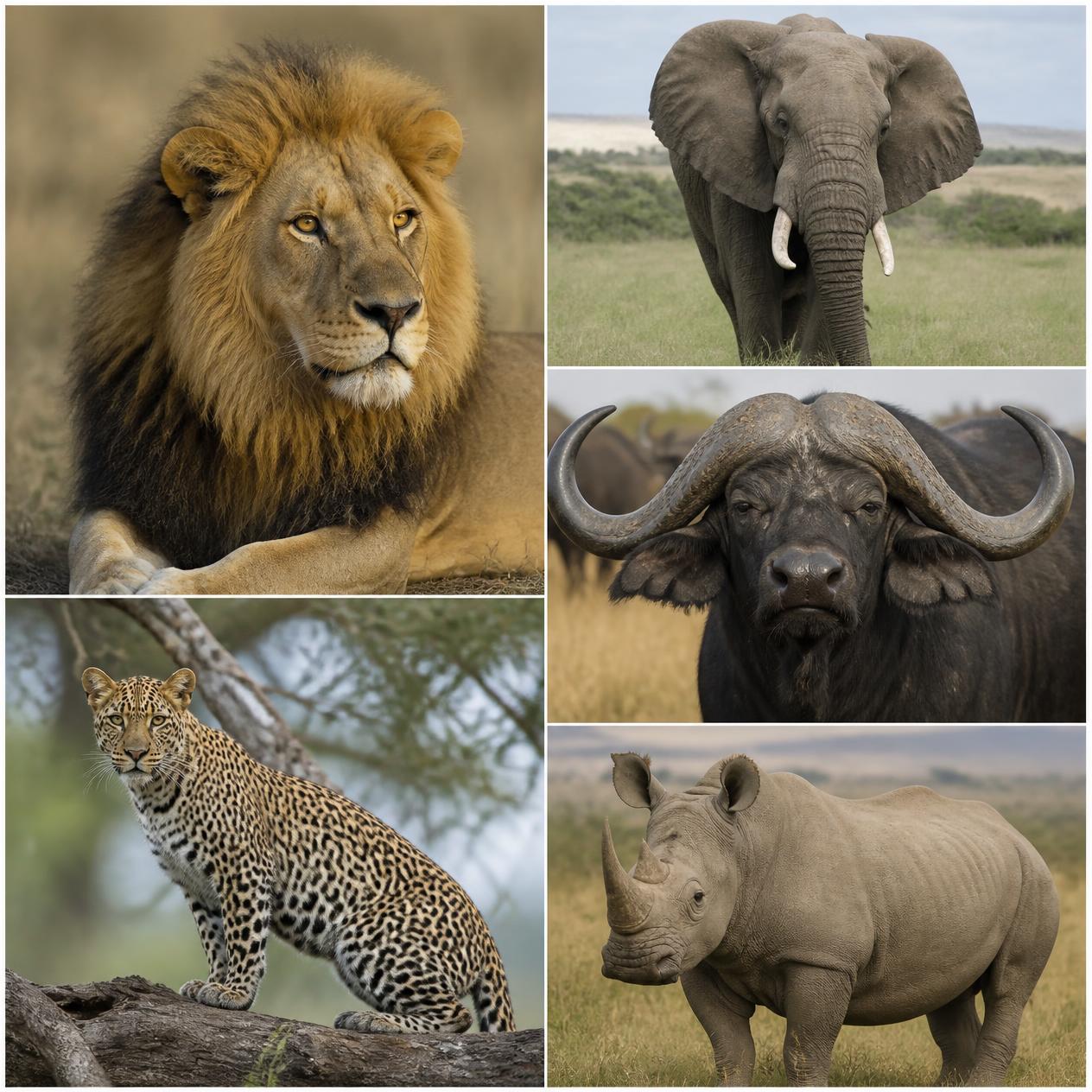
The African Big Five
The African Big Five are:
- Lion
- Leopard
- African Elephant
- African Buffalo
- Rhinoceros
These animals are among the most iconic species visitors hope to see during a Kenya safari. Today, the term is associated with wildlife photography, safari tourism, and conservation rather than hunting.
Why are they callled the big five?
The term was originally used by big-game hunters to describe the five African animals considered the most dangerous and challenging to hunt on foot. Their strength, unpredictable behaviour, speed, and ability to defend themselves made them particularly dangerous encounters.
Today, the meaning has changed significantly. The Big Five are now among Africa's most photographed and admired animals, and seeing them has become one of the greatest goals of an African wildlife safari.
Important: A Big Five safari is now about conservation, photography, and appreciating wildlife in its natural habitat—not hunting.
Where In Kenya Can you see the Big Five
Some destinations offer much better chances of seeing particular species than others.
The Best Destinations for Big Five Sightings in Kenya
1. Ol Pejeta Conservancy – One of the Best All-Round Big Five Destinations
Ol Pejeta Conservancy is one of the strongest destinations for travellers hoping to see the Big Five during a single safari.
The conservancy is home to:
- Lions
- Leopards
- Elephants
- Buffaloes
- Black and white rhinos
Ol Pejeta is particularly famous for its rhino conservation programme and is home to the world's last two northern white rhinos. Because rhinos are protected within the conservancy, Ol Pejeta offers one of Kenya's strongest opportunities to see this endangered member of the Big Five.
Best for: Travellers with limited time who want excellent chances of seeing all five animals.
2. Masai Mara National Reserve – Best for Lions and Leopards
The Masai Mara is one of the world's most famous safari destinations and offers excellent opportunities to see four members of the Big Five: lions, leopards, elephants, and buffaloes.
Rhinos are much more difficult to find, meaning a sighting cannot be relied upon during a standard safari.
The reserve is particularly famous for its healthy predator populations and vast open plains, which make wildlife easier to spot.
Best for: Lions, leopards, predators, and the Great Wildebeest Migration.
3. Lake Nakuru National Park – Best for Rhinos
Lake Nakuru National Park is one of Kenya's most important destinations for rhino conservation.
The park offers excellent opportunities to see:
- Black rhinos
- White rhinos
- Lions
- Leopards
- Buffaloes
Lake Nakuru is therefore an excellent destination to combine with the Masai Mara or another elephant-rich park when planning a complete Big Five safari.
Best for: Rhino sightings and wildlife photography.
4. Amboseli National Park – Best for Elephants
Amboseli National Park is internationally famous for its large elephant herds and spectacular views of Mount Kilimanjaro.
Visitors can also see lions, buffaloes, and occasionally leopards, although rhinos are not part of the regular wildlife population in the park.
Amboseli is one of the best places in Africa to photograph elephants in their natural environment.
Best for: Elephants, photography, and Mount Kilimanjaro scenery.
Which Safari Destination Guarantees the Big Five?
No safari destination can genuinely guarantee sightings of wild animals because wildlife moves freely and sightings depend on factors such as weather, vegetation, time of day, and animal behaviour.
However, Ol Pejeta Conservancy offers one of the best chances of seeing all members of the Big Five within a single destination, particularly because of its strong rhino population and well-protected wildlife areas.
For the strongest overall Big Five experience in Kenya, consider combining destinations.
Recommended Big Five Safari Combination
Masai Mara + Ol Pejeta Conservancy
This combination offers excellent opportunities for:
- Lions
- Leopards
- Elephants
- Buffaloes
- Rhinos
Another excellent combination is:
Masai Mara + Lake Nakuru National Park
The Masai Mara offers exceptional predator and plains wildlife viewing, while Lake Nakuru significantly improves your chances of seeing rhinos
Meet Kenya's Big Five Animals
1. Lion – The King of the African Savannah
The lion is perhaps the most recognisable African predator and one of the animals travellers are most excited to see on safari.
Lions usually live in social groups known as prides, unlike most other large cats.
Fun Facts About Lions
- . Lions are the only big cats that commonly live in social groups.
- . A group of lions is called a pride.
- . Female lions are usually the main hunters in the pride.
- . A male lion's roar can travel for several kilometres.
- . Lions spend much of the day resting and are often more active during cooler hours.
Best Places to See Lions in Kenya
- Masai Mara National Reserve
- Amboseli National Park
- Ol Pejeta Conservancy
- Tsavo National Parks
Best overall destination: Masai Mara
2. Leopard – The Most Elusive Big Five Animal
The leopard is one of Africa's most beautiful and difficult animals to spot.
Unlike lions, leopards are usually solitary and highly secretive. They are masters of camouflage and often rest in trees or thick vegetation during the day.
Fun Facts About Leopards
- Leopards are excellent climbers.
- They often drag their prey into trees to protect it from other predators.
- Every leopard has a unique pattern of rosettes on its coat.
- Leopards are extremely adaptable and can survive in forests, mountains, grasslands, and other habitats.
- They are among the most difficult members of the Big Five to spot.
- Masai Mara National Reserve
- Samburu National Reserve
- Ol Pejeta Conservancy
- Tsavo West National Park
Best overall destination: Masai Mara, especially with an experienced safari guide.
The African elephant is the largest land animal on Earth and one of the most impressive animals to encounter during a safari.
Elephants are highly intelligent, emotional, and social animals. They live in family groups led primarily by experienced females known as matriarchs.
Fun Facts About African Elephants
- African elephants are the world's largest land animals.
- Their trunks contain thousands of muscles.
- Elephants communicate using sounds that humans cannot always hear.
- They have excellent memories and complex social relationships.
- Elephant calves can stand shortly after birth.
Best Places to See Elephants in Kenya
- Amboseli National Park
- Tsavo East National Park
- Tsavo West National Park
- Masai Mara National Reserve
- Ol Pejeta Conservancy
Best overall destination: Amboseli National Park
4. African Buffalo – The Powerful Herd Animal
The African buffalo is one of the most underestimated animals on safari. Although it may appear calm while grazing, buffaloes are powerful and highly protective animals.
They often live in large herds and are especially protective of young or vulnerable members of the group.
Fun Facts About African Buffaloes
- Buffaloes can form herds containing hundreds of individuals.
- They have strong social structures.
- Older males are sometimes known as solitary bulls.
- Buffaloes are extremely powerful and can successfully defend themselves against predators.
- Lions are among their main natural predators.
Best Places to See Buffaloes in Kenya
- Masai Mara National Reserve
- Amboseli National Park
- Ol Pejeta Conservancy
- Tsavo National Parks
- Lake Nakuru National Park
Best overall destination: Masai Mara or Ol Pejeta Conservancy.
5. Rhinoceros – Kenya's Conservation Icon
The rhinoceros is one of the rarest and most threatened members of the Big Five.
Kenya is home to both black rhinos and white rhinos, and the country has played an important role in rhino conservation.
Because rhinos are less common than many other safari animals, choosing the right destination is essential if you want to see them.
Fun Facts About Rhinos
- Kenya is home to both black and white rhinos.
- Despite their names, black and white rhinos are both generally grey.
- Black rhinos and white rhinos have different feeding habits.
- Rhinos have poor eyesight but excellent hearing and smell.
- Rhino conservation remains one of the most important wildlife protection efforts in Africa.
Best Places to See Rhinos in Kenya
- Ol Pejeta Conservancy
- Lake Nakuru National Park
- Nairobi National Park
- Tsavo West National Park
Best overall destinations: Ol Pejeta Conservancy and Lake Nakuru National Park.
Big Five Safari in Kenya: Quick Comparison
| Animal | Best Safari Destination | Difficulty of Sighting |
|---|---|---|
| Lion | Masai Mara | Easy to Moderate |
| Leopard | Masai Mara / Samburu | Difficult |
| Elephant | Amboseli | Easy |
| Buffalo | Masai Mara / Ol Pejeta | Relatively Easy |
| Rhino | Ol Pejeta / Lake Nakuru | High with proper planning |
What Is the Hardest Big Five Animal to See?
The leopard is generally considered one of the most difficult Big Five animals to spot during a safari because it is solitary, secretive, and highly skilled at camouflage.
Rhinos can also be difficult to see in areas where their populations are small.
For this reason, travellers hoping to see all five animals should plan their safari around destinations known for specific species rather than relying on chance.
Can You See the Big Five on One Safari?
Yes, it is possible to see the Big Five during one Kenya safari, but the best strategy is to allow enough time and visit more than one wildlife destination.
A safari combining Masai Mara and Ol Pejeta Conservancy provides one of the strongest opportunities.
Suggested Safari Duration
For the best chances, consider:
- 3–4 days: Focus on one major destination.
- 5–7 days: Combine two safari destinations.
- 7–10 days: Enjoy a more relaxed Big Five safari with multiple parks.
The longer you spend on safari, the greater your opportunities for wildlife sightings.
When Is the Best Time to See the Big Five in Kenya?
The Big Five can be seen in Kenya throughout the year.
However, the dry seasons are generally preferred for wildlife viewing because vegetation is thinner and animals often gather around reliable water sources.
Popular Dry Seasons
- January to March
- June to October
The exact experience varies by destination. The Masai Mara, for example, is particularly popular during the Great Wildebeest Migration season, while Ol Pejeta and Lake Nakuru offer rewarding wildlife viewing throughout the year.
Tips for Increasing Your Chances of Seeing the Big Five
1. Choose the Right Destinations
Do not expect every park to offer the same wildlife experience. Select destinations based on the animals you most want to see.
2. Allow Enough Time
A longer safari provides more opportunities for wildlife sightings.
3. Travel with an Experienced Safari Guide
Professional guides understand animal behaviour and know the areas where different species are frequently found.
4. Go on Early Morning Game Drives
Many animals are most active during the cooler morning hours.
5. Be Patient
Wildlife sightings are never completely predictable. Sometimes the most memorable sightings happen when you least expect them.
Frequently Asked Questions About the Big Five
What are the Big Five animals?
The Big Five are the lion, leopard, African elephant, African buffalo, and rhinoceros.
Why are they called the Big Five?
They were originally named by big-game hunters as the five animals considered the most dangerous and challenging to hunt on foot. Today, the term is associated with wildlife tourism and conservation.
Which country is best for a Big Five safari?
Kenya is one of Africa's leading destinations for Big Five safaris because it offers diverse national parks and conservancies where all five animals can be found.
Can you see all Big Five animals in one day?
It is possible but never guaranteed. Wildlife sightings depend on animal movement, habitat, weather, and luck. Multiple game drives significantly improve your chances.
Which park is best for seeing all the Big Five in Kenya?
Ol Pejeta Conservancy is one of the strongest single destinations for travellers hoping to see all five, particularly because of its important rhino populations. However, no responsible safari operator should promise guaranteed sightings of every wild animal.
Which Big Five animal is the hardest to see?
The leopard is often the most difficult to spot because it is solitary, elusive, and highly camouflaged.
Which is the easiest Big Five animal to see?
This depends on the safari destination, but elephants and buffaloes are often among the easier Big Five animals to encounter in Kenya's major wildlife areas.
Why the Big Five Are Still the Ultimate Safari Experience
Seeing the Big Five is about much more than completing a wildlife checklist. Each animal represents a different part of Africa's extraordinary ecosystems—from the social structure of lion prides and elephant herds to the remarkable survival story of endangered rhinos.
For travellers planning a Kenya safari, the best approach is to choose destinations strategically. The Masai Mara offers outstanding predator sightings, Amboseli is exceptional for elephants, while Ol Pejeta Conservancy and Lake Nakuru National Park are among the strongest choices for rhino encounters.
By combining the right destinations and allowing enough time for game drives, you can greatly increase your chances of experiencing all five of Africa's legendary animals on one unforgettable Kenya safari.
Book Your Big Five Safari with Malaso Africa Safaris
Ready to experience Africa's legendary Big Five? Malaso Africa Safaris can help you plan a personalised Kenya safari based on your travel dates, budget, preferred accommodation, and wildlife interests.
Whether you want to explore the wildlife-rich plains of the Masai Mara, see magnificent elephants in Amboseli, track rhinos at Ol Pejeta Conservancy, or combine several destinations for the ultimate Big Five experience, our experienced safari team is ready to assist.
We offer:
1. Tailor-made Kenya safari packages
2. Private and group joining safaris
3. Professional safari driver-guides
4. Comfortable 4x4 safari vehicles
5. Budget, mid-range, and luxury accommodation options
6. Multi-destination Big Five safari itineraries
7. Personalised travel planning and booking support
Start Planning Your Kenya Safari Today
Contact Malaso Africa Safaris today to book your Big Five adventure and let us create an unforgettable safari experience tailored to you.
Your African adventure begins with Malaso Africa Safaris.