The Great Wildebeest Migration Complete Guide: Best Time, River Crossings & Safari Tips
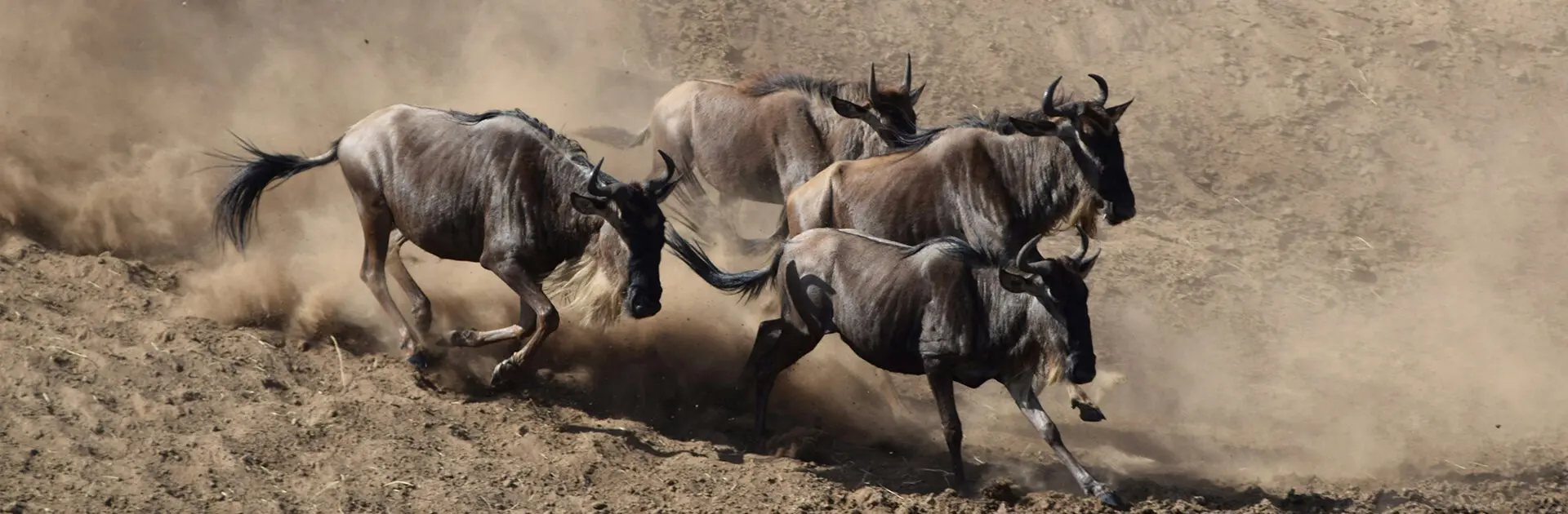
Discover everything you need to know about the Great Wildebeest Migration. Learn when to visit, where to see the famous Mara River crossings, what to expect, and how to plan the ultimate Kenya migration safari.
The Complete Guide to the Great Wildebeest Migration
The Great Wildebeest Migration is one of the most extraordinary wildlife events on Earth. Every year, more than two million wildebeests, accompanied by hundreds of thousands of zebras and gazelles, embark on a remarkable journey across the Serengeti-Maasai Mara ecosystem in search of fresh grazing and water. This continuous movement creates one of nature's greatest spectacles and attracts travellers, photographers, and wildlife enthusiasts from every corner of the world.
Unlike what many people believe, the migration is not a single event that happens on one particular day. It is a year-round cycle driven by rainfall, grazing conditions, and the instinct for survival. Every stage of the migration offers something unique, from the calving season in Tanzania to the dramatic Mara River crossings in Kenya.
If witnessing the Great Wildebeest Migration is on your travel bucket list, this guide will help you understand when to visit, where to go, what to expect, and how to plan the perfect safari.
What Is the Great Wildebeest Migration?
The Great Wildebeest Migration is the world's largest overland wildlife migration. Every year, approximately 1.5 million wildebeests, together with over 300,000 zebras and hundreds of thousands of gazelles, travel in a continuous circular route between Tanzania's Serengeti National Park and Kenya's Maasai Mara National Reserve.
The migration is not organized or predictable to the exact day. Instead, it follows seasonal rainfall, as the animals search for fresh grass and water. Along the journey, they face numerous challenges, including crocodile-filled rivers, hungry predators, exhaustion, and changing weather conditions.
It is this constant struggle for survival that makes the migration one of the greatest wildlife experiences on the planet.
Why Is the Migration So Famous?
The migration is famous because of its sheer scale and drama. Imagine standing on the banks of the Mara River as thousands of wildebeests gather nervously before suddenly charging into the water. Powerful currents, enormous crocodiles, and steep riverbanks make every crossing unpredictable and unforgettable.
Beyond the river crossings, the migration supports an incredible ecosystem. Lions, leopards, cheetahs, hyenas, and crocodiles follow the herds, creating spectacular predator-prey interactions throughout the year.
No two migration safaris are ever the same, making each visit a unique experience.
Where Does the Migration Take Place?
The migration moves between two of Africa's most iconic protected areas:
Serengeti National Park in Tanzania
Maasai Mara National Reserve in Kenya
Together, these two ecosystems form one continuous wildlife corridor, allowing millions of animals to move freely across international borders.
Although the migration spends much of the year in Tanzania, the arrival of the herds in Kenya's Maasai Mara between July and October is considered the highlight for many travellers.
When Is the Best Time to See the Migration?
The migration can be experienced throughout the year, but different months offer different highlights.
January to March – Calving Season
The southern Serengeti becomes the nursery of the migration as hundreds of thousands of wildebeest calves are born within just a few weeks.
This period offers exceptional predator action, as lions, cheetahs, hyenas, and leopards take advantage of the abundance of vulnerable young animals.
It is an excellent time for wildlife photographers and visitors who enjoy dramatic wildlife interactions.
April to June – The Journey North Begins
As rainfall patterns change, the herds begin moving north through the Serengeti.
During this period, visitors can witness enormous columns of wildebeests stretching across the plains, often accompanied by zebras and gazelles.
Because this season receives fewer visitors, travellers can enjoy a quieter safari while still experiencing impressive wildlife.
July to October – The Mara River Crossings
This is the period most people associate with the Great Wildebeest Migration.
As the herds arrive in Kenya's Maasai Mara, they encounter the famous Mara River. Thousands of animals gather along the riverbanks before attempting dangerous crossings in search of greener grazing.
These crossings are unpredictable. Some happen several times a day, while others may not occur for several days.
Patience is often rewarded with one of Africa's most unforgettable wildlife spectacles.
November to December – The Journey South
With the arrival of seasonal rains, the herds begin moving back toward Tanzania.
Although the famous river crossings have largely ended, visitors can still enjoy outstanding wildlife viewing as the migration continues its annual cycle.
What Animals Will You See?
While the migration itself is the main attraction, it also provides incredible opportunities to observe many other species.
Visitors frequently encounter:
Lions, Leopards, Cheetahs, Elephants, Buffaloes, Hippos, Nile crocodiles, Hyenas, Jackals, Giraffes, Zebras, Gazelles, Topis, Elands
More than 500 bird species
The abundance of prey makes the Maasai Mara one of Africa's best places to observe predators.
How Many Days Should You Spend on a Migration Safari?
A common mistake is booking a safari that is too short.
Because river crossings are unpredictable, spending at least three to four nights in the Maasai Mara significantly increases your chances of witnessing the migration.
Many travellers choose four or five-day itineraries, allowing enough time to explore different regions of the reserve while maximizing wildlife viewing opportunities.
Which Safari Vehicle Is Best?
For migration safaris, a 4WD Safari Land Cruiser with an open pop-up roof is highly recommended.
These vehicles provide:
Better off-road capability
Comfortable seating
Excellent photography angles
Larger windows
Greater stability on rough terrain
Professional safari guides also play an important role by monitoring wildlife movements and communicating with other guides to locate the best migration sightings.
Frequently Asked Questions
Is the Great Wildebeest Migration guaranteed?
The migration happens every year, but exact locations and river crossings cannot be predicted because they depend on rainfall and grazing conditions.
What is the best month to see the Mara River crossings?
July through October generally offers the best opportunities, although the exact timing varies each year.
Is the migration worth seeing?
Absolutely. It is widely regarded as one of the greatest wildlife spectacles in the world and is often described as a once-in-a-lifetime safari experience.
Can children join a migration safari?
Yes. Many safari lodges and camps welcome families, making the migration an unforgettable educational experience for children.
Should I book my migration safari early?
Yes. Migration season is Kenya's busiest safari period. Booking six to twelve months in advance provides the best choice of accommodation and travel dates.
Tips for Planning Your Migration Safari
To enjoy the best possible experience:
Book your safari early, especially if travelling between July and October.
Choose at least a 4-day itinerary.
Stay in or near the Maasai Mara for quicker access to migration areas.
Travel in a 4WD Land Cruiser for maximum comfort and wildlife viewing.
Carry binoculars, a camera, sunscreen, a hat, and neutral-coloured clothing.
Be patient during river crossings, as they occur naturally and cannot be scheduled.
Experts' Final Thoughts
The Great Wildebeest Migration is much more than a river crossing. It is a year-round story of survival, resilience, and the remarkable balance of nature. Whether you're watching newborn calves take their first steps in the Serengeti or witnessing thousands of wildebeests plunge into the Mara River, every stage of the migration offers unforgettable moments.
For anyone dreaming of an authentic African safari, the Great Wildebeest Migration is an experience unlike any other. Combined with the abundant wildlife, breathtaking landscapes, and exceptional hospitality of the Maasai Mara, it promises memories that will last a lifetime.