
The Hadzabe of Tanzania: Culture, Traditions, Hunting, Language & Fascinating Facts
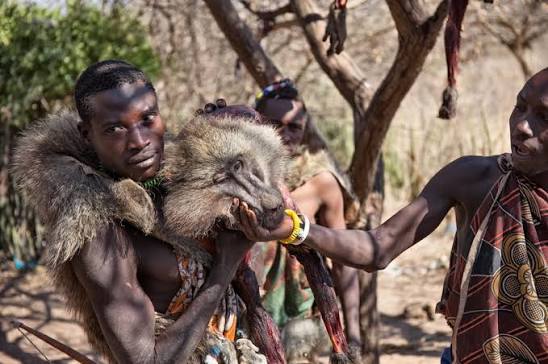
The Hadzabe of Tanzania
In the dry landscapes around Lake Eyasi in northern Tanzania, a small community has maintained a cultural relationship with the land that has fascinated anthropologists, linguists and travellers for generations.
They are the Hadzabe, also widely known as the Hadza.
Their culture is particularly distinctive because traditional Hadzabe life has been closely associated with hunting, gathering wild foods, mobility, small social groups and detailed knowledge of the surrounding environment.
But the most fascinating thing about the Hadzabe is not simply that they are traditionally hunter-gatherers.
It is how their language, food systems, social relationships, environmental knowledge and cultural traditions fit together.
The Hadzabe also provide an important reminder that cultural traditions are not frozen in time. Their communities are experiencing education, changing land use, conservation initiatives, tourism, markets and increasing interaction with wider Tanzanian society.
Understanding the Hadzabe therefore means looking at both their remarkable cultural heritage and the choices they are making in the present.
The Hadzabe are an indigenous ethnolinguistic community living in north-central Tanzania, particularly around the Lake Eyasi region.
Tanzania's Ngorongoro Conservation Area Authority identifies the Hadzabe as an indigenous community of the Lake Eyasi area and distinguishes their traditional hunter-gatherer way of life from the pastoral traditions of neighbouring Maasai and Datoga communities.
Population estimates vary depending on the source, definition and date of the survey. Recent linguistic research describes the Hadza population as roughly around a thousand people, while other research estimates a somewhat larger population. This variation reflects the difficulty of obtaining precise population figures among a relatively small and dispersed community.
The community is particularly important to researchers because Hadzabe society preserves knowledge and practices associated with one of the world's remaining hunter-gatherer traditions.
However, describing the Hadzabe simply as "people from the Stone Age" or "people who have never changed" is inaccurate and disrespectful.
They are contemporary Tanzanians living in a changing world.
Where Do the Hadzabe Live?
The traditional Hadzabe homeland is centred around Lake Eyasi and surrounding areas of north-central Tanzania.
The landscape is characterised by dry woodland, scrub, rocky terrain, seasonal water sources and diverse wild foods.
The environment has shaped Hadzabe culture profoundly.
For a community relying heavily on wild resources, knowing the landscape is not simply useful—it is essential.
Knowledge can include:
- Where particular plants grow
- When fruits become available
- Which roots and tubers can be harvested
- Where honey can be found
- Where animals are likely to occur
- Seasonal water sources
- Signs left by animals
- Changes in vegetation
This detailed ecological knowledge is one of the most remarkable features of traditional Hadzabe life.
The Hadzabe Hunter-Gatherer Tradition
The Hadzabe are one of the few communities in the world where hunting and gathering have remained an important part of traditional subsistence.
Unlike pastoral communities, the Hadzabe traditionally did not depend on large domesticated livestock herds.
Instead, food was obtained from the surrounding environment through a combination of hunting and gathering.
Men have traditionally been more involved in hunting, while women have traditionally gathered a substantial proportion of plant foods.
These roles are not absolute rules for every individual, but they form an important pattern documented in ethnographic research.
The result is a food system based on extensive knowledge of seasonal resources rather than permanent crop cultivation.
How Do the Hadzabe Find Food?
The Hadzabe's environment provides an impressive variety of wild foods.
Gathered foods can include:
- Tubers
- Roots
- Berries
- Fruits
- Seeds
- Honey
- Other edible plant resources
Hunting provides additional sources of animal protein.
The availability of particular foods changes with seasons and rainfall.
This means the Hadzabe must continually adapt their activities according to what the landscape provides.
Their knowledge of the environment is therefore a form of practical expertise developed and transmitted across generations.
Hadzabe Men and Traditional Hunting
Traditional hunting is an important part of Hadzabe cultural identity.
Hunters have historically used bows and arrows and rely heavily on their knowledge of animal behaviour and the surrounding landscape.
Successful hunting requires more than physical ability.
A hunter must understand:
- Animal tracks
- Movement patterns
- Habitat
- Wind
- Vegetation
- Seasonal conditions
- Animal behaviour
This makes hunting a sophisticated form of environmental knowledge.
It is important, however, not to portray hunting as the sole source of Hadzabe food. Gathering is equally important to understanding the traditional subsistence system.
Hadzabe Women and Gathering
Women have traditionally played an important role in collecting plant foods.
Gathering may involve locating and harvesting:
- Roots
- Tubers
- Fruits
- Berries
- Seeds
- Other edible plants
The importance of gathering challenges the popular stereotype that hunter-gatherer societies depend primarily on hunting.
In Hadzabe life, different food sources complement one another.
The ability to identify edible plants and understand their seasonal availability represents a substantial body of ecological knowledge.
Honey: A Highly Valued Wild Food
Wild honey is an important traditional food for the Hadzabe.
Finding honey requires knowledge of bee behaviour, flowering seasons and the location of hives.
Honey also provides a concentrated source of energy.
The importance of honey illustrates a broader feature of Hadzabe culture: the environment is not viewed simply as scenery surrounding a settlement.
It is a source of food, knowledge, materials and livelihood.
What Do the Hadzabe Eat?
Traditional Hadzabe diets are based on a combination of hunted and gathered foods.
Depending on availability, foods can include:
- Wild game
- Honey
- Tubers
- Berries
- Fruits
- Seeds
- Other wild plant foods
The balance changes according to season and location.
This flexibility is important because wild food availability is never constant.
A successful community therefore needs extensive knowledge of seasonal patterns.
Do the Hadzabe Keep Cattle?
Traditionally, the Hadzabe have not been a pastoral society like the Maasai or Datoga.
Their traditional economy has instead been strongly associated with hunting and gathering.
This distinction is particularly interesting because the Hadzabe live in a region where pastoralist and agricultural communities are also present.
Their relationship with neighbouring communities has therefore involved trade, interaction and cultural exchange while maintaining a distinct identity.
The Hadzabe Language: Hadzane
One of the most fascinating aspects of Hadzabe culture is their language, Hadzane.
Hadzane is generally classified as a language isolate, meaning linguists have not established a proven genealogical relationship between it and another living language family.
Recent linguistic research describes Hadzane as a language spoken in the Lake Eyasi region and documents its unusual sound system, including clicks, ejectives and other uncommon sounds.
The language's distinctive click sounds are perhaps its most famous feature.
But it is important to understand that Hadzane is not simply "a language made of clicks."
Clicks form part of a much larger sound system containing many other consonants and vowels.
Why Are Clicks Used in Hadzane?
Clicks are consonant sounds produced using airflow created within the mouth.
They are relatively uncommon among the world's languages.
Hadzane is particularly interesting to linguists because of its click inventory and broader phonological structure.
Another important fact is that Hadzane has no demonstrated close linguistic relationship to southern African Khoisan languages, despite the superficial similarity created by click consonants.
This distinction matters.
Sharing click sounds does not automatically mean two languages belong to the same language family.
The Hadzabe Are Often Multilingual
Although Hadzane is central to Hadzabe identity, many Hadzabe also communicate in Kiswahili.
A 2024 study involving Hadzabe participants found that most participants were multilingual and commonly used both Hadzane and Kiswahili. Kiswahili is particularly important for interaction with neighbouring communities, education, markets, government services and other institutions.
This is a fascinating example of how language can reflect changing social relationships.
Hadzane remains an important marker of cultural identity while Kiswahili connects the community to wider Tanzanian society.
Why Is Hadzane Important?
A language carries much more than words.
It can contain:
- Environmental knowledge
- Cultural concepts
- Oral history
- Social relationships
- Traditional stories
- Names for plants and animals
- Ways of describing the natural world
When a language becomes less widely used, some culturally specific knowledge can become harder to transmit.
For this reason, preserving Hadzane is not simply a linguistic issue. It is also closely connected to preserving Hadzabe cultural knowledge.
Hadzabe Social Organisation
Traditional Hadzabe communities are generally organised in small, flexible social groups rather than large permanent settlements governed by a rigid hierarchy.
People can move between groups and maintain relationships with relatives and other community members.
This flexibility makes sense in a mobile hunter-gatherer system.
When food availability changes, people need social structures that can adapt to changing circumstances.
Researchers have also studied Hadzabe social networks extensively because cooperation, sharing and relationships play important roles in community life.
Food Sharing Among the Hadzabe
Food sharing is an important feature of Hadzabe social life.
When someone obtains food, particularly through hunting, it can be shared beyond the individual hunter and immediate household.
Sharing can strengthen relationships and provide a form of social security.
This is especially important in an environment where hunting success is unpredictable.
One successful hunt may therefore benefit several people rather than only the person who made the kill.
What Are Hadzabe Homes Like?
Traditional Hadzabe shelters are relatively simple structures made from locally available materials.
The form of shelter can change according to season and location.
Tanzania's Ngorongoro Conservation Area Authority describes Hadzabe seasonal use of grass-based shelters and, in some circumstances, natural shelters such as caves or hollowed areas of large trees.
This reflects the mobility traditionally associated with their way of life.
Modern housing, however, is increasingly present among Hadzabe communities, particularly as people engage more with permanent settlements, education and other services.
Hadzabe Beliefs and Spiritual Traditions
Like many cultures with strong oral traditions, the Hadzabe have their own stories and beliefs concerning the origins of the world, people, animals and natural forces.
Their traditional spiritual worldview is closely connected to the environment.
The sky, animals, landscape and weather are not merely physical phenomena but can carry cultural and spiritual significance.
Traditional stories have historically helped explain the world and communicate values between generations.
Hadzabe Music, Singing and Dance
Music and dance form part of Hadzabe cultural life.
Songs can accompany social occasions and communal activities.
Rather than treating these traditions simply as performances for visitors, they should be understood as expressions of community identity.
Oral traditions, songs and stories have historically been important ways of preserving knowledge in societies where much information is transmitted verbally.
The Hadzabe and Their Environment
Perhaps the most striking aspect of Hadzabe culture is the depth of knowledge associated with their environment.
A landscape that might appear dry and empty to an unfamiliar visitor can contain an extraordinary amount of information for someone who knows how to read it.
A particular plant may indicate a season.
A footprint can reveal the presence of an animal.
The condition of vegetation can provide clues about water availability.
The flowering of a plant can indicate when another food source may become available.
This environmental knowledge is one of the Hadzabe's most valuable forms of cultural heritage.
The Hadzabe and Modern Change
The Hadzabe are not isolated from the modern world.
Today, members of the community increasingly interact with:
- Schools
- Health services
- Markets
- Government institutions
- Tourism
- Conservation programmes
- Mobile technology
- Wider Tanzanian society
A 2024 academic study described the Hadzabe as a multilingual population in which Kiswahili is used extensively alongside Hadzane for interactions beyond the immediate community.
This does not mean that Hadzabe identity is disappearing.
Instead, the community is negotiating how traditional practices can coexist with new opportunities and pressures.
Education and the Younger Generation
Education is one of the most significant changes affecting contemporary Hadzabe communities.
For some families, formal schooling offers access to opportunities that were previously unavailable.
For others, there are concerns about what prolonged absence from traditional environments may mean for the transmission of cultural knowledge.
This creates an important question:
Can a community gain the benefits of education and modern services while maintaining its language and cultural heritage?
There is no single answer.
Different Hadzabe individuals and families may make different choices.
That diversity of opinion is itself part of contemporary Hadzabe life.
Land and Conservation
Land is one of the most important issues affecting the future of Hadzabe culture.
Their traditional livelihood depends heavily on access to natural landscapes.
When land is converted to farming, grazing, settlements or other uses, access to wild food resources can decline.
This means cultural preservation is closely connected to environmental and land rights.
The Yaeda Valley has become an important example of community-oriented conservation and land management involving the Hadzabe.
For the Hadzabe, protecting the landscape can mean protecting both biodiversity and a way of life.
The Yaeda Valley
The Yaeda Valley in northern Tanzania is particularly important in discussions about Hadzabe land and conservation.
The area is part of the broader landscape where Hadzabe communities maintain connections to hunting, gathering and traditional environmental knowledge.
Conservation initiatives in the region have sought to connect environmental protection with community interests.
This is an important principle:
Conservation is more sustainable when the people who have historically depended on the landscape have a meaningful role in its management.
Hadzabe Cultural Tourism
Some travellers visiting northern Tanzania combine wildlife safaris with a visit to a Hadzabe community.
The Lake Eyasi region is accessible from major northern Tanzania safari destinations, making cultural visits possible alongside itineraries covering destinations such as:
- Ngorongoro
- Serengeti
- Tarangire
- Lake Manyara
A responsible cultural visit should focus on learning and genuine interaction rather than staging exaggerated performances.
Visitors can learn about:
- Traditional food gathering
- Hunting traditions
- Tools
- Language
- Community life
- Environmental knowledge
- Cultural history
The quality of the experience depends heavily on the community and local guides involved.
Visit to the Hadzabe Community
A cultural visit should begin with respect.
Travellers should:
- Ask before taking photographs.
- Follow local guidance.
- Listen rather than assume.
- Avoid describing people as "primitive."
- Avoid treating hunting or cultural practices as entertainment.
- Purchase crafts responsibly where available.
- Use reputable local guides.
- Respect community decisions about what may or may not be photographed or shared.
- Remember that individual Hadzabe people have different opinions and lifestyles.
Most importantly, visitors should understand that they are meeting a living community, not travelling backwards in time.
15 Fascinating Facts About the Hadzabe
1. They live around Lake Eyasi in northern Tanzania.
The Lake Eyasi region is the heartland most strongly associated with contemporary Hadzabe communities.
2. Hunting and gathering are central to their traditional culture.
The Hadzabe are one of the world's best-known contemporary hunter-gatherer societies.
3. Their language is called Hadzane.
Hadzane is notable for its unusual sound system and click consonants.
4. Hadzane is considered a language isolate.
Linguists have not established a proven close genealogical relationship between Hadzane and another living language family.
5. Most Hadzabe also speak Kiswahili.
Research shows widespread multilingualism among contemporary Hadzabe communities.
6. Honey is an important wild food.
Finding honey requires extensive knowledge of the environment.
7. Women have traditionally been major food gatherers.
Plant foods form an important part of traditional Hadzabe subsistence.
8. Hunting is traditionally associated more strongly with men.
But hunting is only one component of the broader food system.
9. Food sharing is culturally important.
Sharing helps strengthen social relationships and distribute resources.
10. Their social groups can be flexible.
Traditional mobility allows people to adjust their social and residential arrangements according to circumstances.
11. The environment is a source of detailed cultural knowledge.
Plants, animals, water and seasons all form part of the knowledge required for traditional subsistence.
12. The Hadzabe are not pastoralists.
Unlike neighbouring Maasai and Datoga communities, their traditional livelihood has been centred on hunting and gathering.
13. Their culture is changing.
Education, markets, conservation, tourism and interaction with wider Tanzanian society are influencing contemporary Hadzabe life.
14. Their language is an important part of their identity.
The continued use of Hadzane helps maintain cultural continuity.
15. The Hadzabe are a modern community with an ancient cultural heritage.
Their traditions have deep historical roots, but the people themselves live in the present and make contemporary choices about their future.
Frequently Asked Questions About the Hadzabe
Who are the Hadzabe?
The Hadzabe are an indigenous ethnolinguistic community of northern Tanzania traditionally associated with hunting and gathering.
Where do the Hadzabe live?
They live primarily around Lake Eyasi and surrounding areas of north-central Tanzania.
Are the Hadzabe the same as the Maasai?
No. They are distinct communities with different languages, histories, livelihoods and cultural traditions.
What language do the Hadzabe speak?
Their traditional language is Hadzane. Many Hadzabe also speak Kiswahili.
Why does Hadzane have clicks?
Clicks are part of the language's sound system. Their presence does not mean Hadzane belongs to a southern African Khoisan language family. Hadzane is generally treated as a language isolate.
Are the Hadzabe hunter-gatherers?
Traditionally, yes. Hunting and gathering have been central to Hadzabe subsistence, although contemporary livelihoods are increasingly diverse.
What do the Hadzabe eat?
Traditional foods include hunted game, honey, tubers, fruits, berries and other wild plant foods.
Do Hadzabe people farm?
Traditional Hadzabe culture has not been based on agriculture in the same way as neighbouring farming communities. However, contemporary livelihoods are changing and some individuals participate in agriculture and other economic activities.
Do the Hadzabe live in permanent houses?
Some still maintain traditional shelters or mobile patterns of living, while others increasingly use permanent housing.
Can tourists visit the Hadzabe?
Yes. Cultural experiences are available in the Lake Eyasi region and can be incorporated into northern Tanzania safari itineraries.
What is special about Hadzabe culture?
The combination of their language, traditional hunter-gatherer knowledge, social organisation, oral traditions and detailed understanding of the natural environment makes their culture particularly distinctive.
Are the Hadzabe disappearing?
Their population is small and their traditional way of life faces pressures from land-use changes, education, economic integration and other social changes. However, it is more accurate to describe the community as adapting than simply disappearing.
Hadzabe Culture and a Northern Tanzania Safari
A Hadzabe cultural experience can be incorporated into a northern Tanzania safari.
For example:
Day 1: Arusha – Tarangire
Day 2: Tarangire – Ngorongoro
Day 3: Hadzabe cultural experience around Lake Eyasi
Day 4–5: Serengeti
Day 6: Serengeti – Ngorongoro
Day 7: Ngorongoro – Arusha
A longer itinerary can combine the cultural experience with additional nights in the Serengeti.
The exact routing should depend on the traveller's interests, road conditions, accommodation and the arrangements made with the local community.
The Hadzabe story is fascinating because it challenges many assumptions about culture, modernity and human relationships with nature.
Their traditional society developed around a remarkable understanding of the environment surrounding Lake Eyasi.
Hunters learned to interpret animal behaviour and tracks. Gatherers developed extensive knowledge of plants and seasonal resources. Families and social groups developed flexible ways of sharing food and living together. Their language developed an extraordinary sound system that remains one of the most interesting linguistic features of East Africa.
Yet the Hadzabe are not simply a window into humanity's distant past.
They are people living in Tanzania today.
Some continue traditional hunting and gathering. Others pursue education, work, conservation and new economic opportunities. Many combine different aspects of traditional and modern life.
That is perhaps the most important fact to remember when learning about the Hadzabe.
Their culture is not a museum exhibit.
It is a living heritage—one that is changing, adapting and being shaped by the choices of Hadzabe people themselves.